


The EJX-A series is Yokogawa's premium performance line of DPharp transmitters. Released in 2004, it offers the performance and stability needed in demanding applications. The EJX-A series performance makes it the the thoroughbred of the DPharp family of pressure transmitters.
The EJX630A is the high performance In-Line Mount Gauge Pressure Transmitter in the series.
EJX630A standard features include:
Explore how the EJX630A can help you Boost your bottom line.


OpreX is the comprehensive brand for Yokogawa’s industrial automation (IA) and control business and stands for excellence in the related technology and solutions. It consists of categories and families under each category. This product belongs to the OpreX Field Instruments family that is aligned under the OpreX Measurement category.
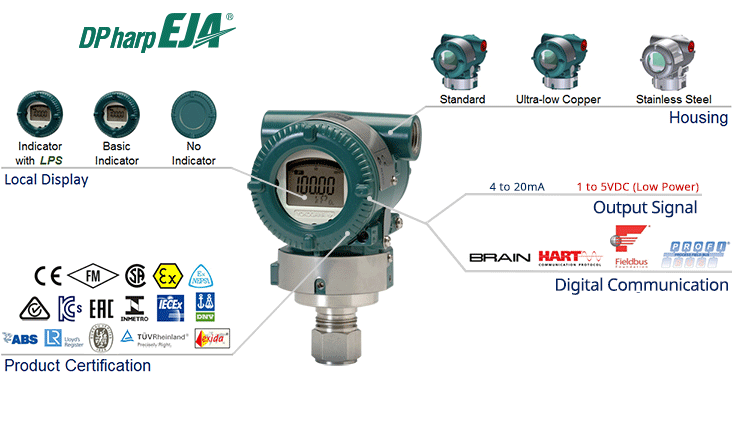
Mounting
Plants run better with Yokogawa differential pressure transmitters.
At it's heart, Yokogawa's differential pressure transmitter with DPharp digital sensor offers the performance and device intelligence needed to get greater insight into your process.
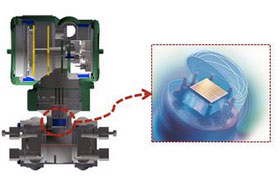
Yokogawa's DPharp digital sensor offers twice the performance and stability of the competitor's analog sensors. The DPharp uses the latest in IC Chip-style design and manufacturing technology. Analog sensors are based on older design technology. Although analog sensors are good, the modern DPharp sensor out performs them. A Yokogawa transmitter with DPharp digital sensor will give you the consistent, reliable, accurate measurement you need.
Poor Performance = Lost Money
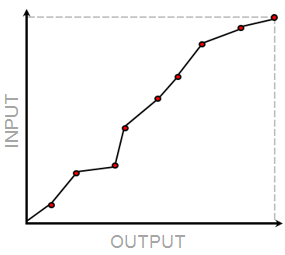
Signal characterization is a versatile function available on all Yokogawa pressure transmitters. The function is used to compensate the analog 4 to 20 mA output signal for non-linear applications. Such applications include tank strapping or flow measurements; but, it can be used in any application where the relationship between the pressure input and the desired output signal are known. This feature can use up to 10-points.
Greater Flexibility = Found Money
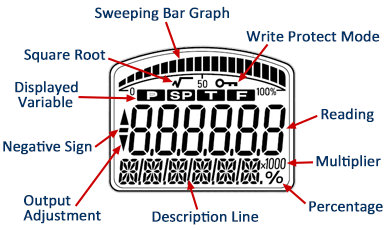
All of the process variable's measured by Yokogawa's transmitter can be displayed on the easy to read local indicator. The indicator can display any of the variables measured (DP, SP, Capsule temperature); alarm codes with short text; and a sweeping bar graph to give a graphical representation of the process. Fully programmable, the indicator is customizable for your needs. Unlike competitor's transmitters, the indicator is not driven off the 4 to 20 mA analog signal, but, exist on a separate circuit. This allow the display to operate independently from the output signal, so it can indicate information that maybe more useful at the transmitter location.
More information = Found Money
Yokogawa's transmitter has 40 self-diagnostic checks to ensure that everything is running smoothly within the transmitter. But, all transmitters on the market have a level self-diagnostic checks. However, Yokogawa has two that are not offered by competitors. First, the transmitter features a patented Back-check Technology that reverse checks all calculations in real-time. Second, the DPharp sensor is an active sensor. This means that the sensor is constantly supplying a signal even when the process has not changed. If the signal is lost from the sensor, the transmitter knows there is an issue. Competitor's analog sensors are passive. They do not supply a continual signal, so, is the sensor still working when there is no signal?
Good Diagnostics = Less Surprises
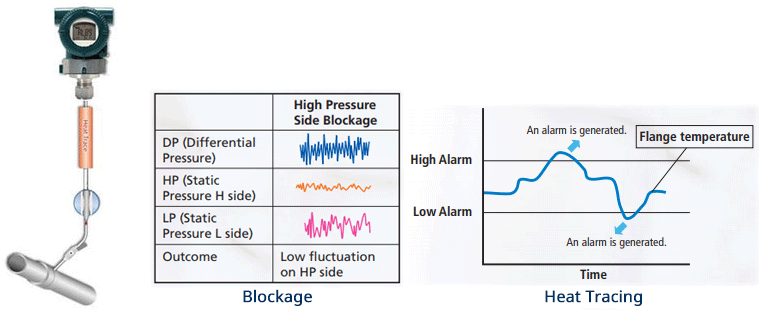
Reduce unscheduled maintenance by 60%.
Predictive impulse line blocking and stream tracing diagnostics lets you see problems before they happen.
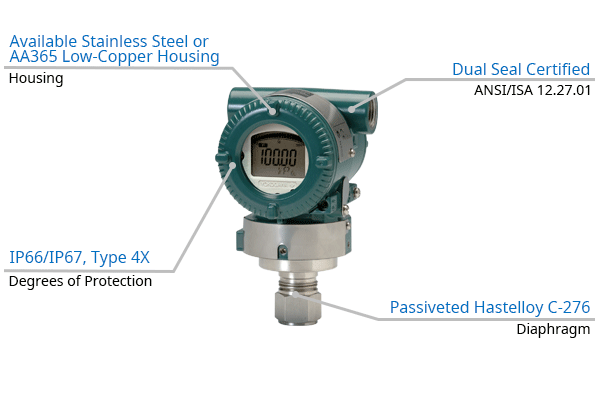
Ruggedly constructed differential pressure transmitter can help your plant reduce failures. Yokogawa pressure transmitters have construction features that are designed to allow it to outlive your plant.
Note: For conformance to NACE MR0175/MR0103, please refer to General Specifications of each model.
Ruggedness = Reliability

The Yokogawa pressure transmitter series' performance and reliability has been verified by independent third parties from around the world.
All Yokogawa pressure transmitters are designed and certified to IEC61508:2010 Parts 1 through 7 and IEC61511:2004 Parts 1 through 3. They are certified for single transmitter use in SIL 2 safety applications and dual transmitter use in SIL 3 safety applications with no special option required. With Yokogawa's transmitters, no longer will you have to maintain two seperate inventories - one for production applications and one for safety applications.
Functional Safety = Reliability
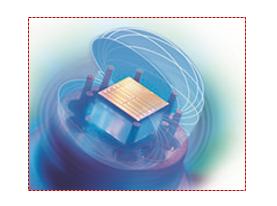
The DPharp sensor is an active sensor. This means that the sensor is constantly supplying a signal even when the process has not changed. If the signal is lost from the sensor, the transmitter knows there is an issue. Competitor's analog sensors are passive. They do not supply a continual signal, so is the sensor still working when there is no signal? An active sensor is inherently safe.
Inherently Safe = Reliability
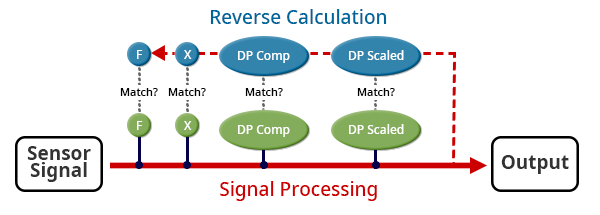
Yokogawa's pressure transmitters as a patented real-time reverse check of the signal to ensure all calculations are preformed correctly. This system ensures that the transmitter is converting the signal from the sensor into the analog signal and digital protocol correctly.
Inherently Safe = Reliability
Yokogawa's DPharp pressure transmitters offer long-term stability and diagnostics to make your maintenance routine easy.
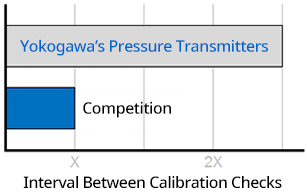
Yokogawa's pressure transmitters have a long-term stability under all operational conditions. As you gain experience with these transmitters, you will be able to extend the time between calibration checks.
Quicker Maintenance = Less Downtime
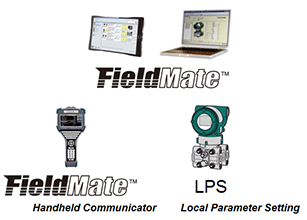
Yokogawa offers several platforms to communicate to your transmitter.
FieldMate is a PC based communication platform that can communicate with your transmitter and manage your entire instrument inventory.
FieldMate HHC is a traditional hand-held platform that allows you to take that information into the field.
Forgot your HHC? No problem. The LPS feature on the transmitter allows you to update 9 parameters without the use of an HHC.
Quicker Maintenance = Less Downtime
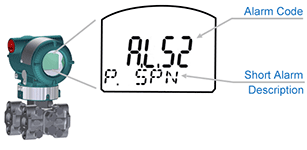
When your transmitter is 'alarming', you do not have the time to look for the manuals and go through them trying to figure out what is wrong; you need to get the transmitter up and operating again as quick as possible. Yokogawa's pressure transmitters have a simple description of the error code available on the local display. This simple description may help you correct the problem and get back to making product quickly. If you need more help, the manual does have a full description of all codes and suggest corrective actions.
Quicker Maintenance = Less Downtime
Refer to the General Specification sheet located under the 'Downloads' tab for detailed specifications.
| Measurement Types | |
|---|---|
| Primary Variable | Absolute Pressure |
| Reference Accuracy | |
| Primary Variable | ±0.04% of Span ±0.025% of Span (/HAC option) |
| Stability | |
| Primary Variable | ±0.1% of URL per 15 years |
| Response Time | |
| Primary Variable | 90ms |
| Rangeability | |
| Primary Variable | A Capsule: 100:1 B, C, or D Capsule: 200:1 |
| Burst Pressure (Absolute) | |
| A, B, or C Capsule | 7,250 psi (50 MPa) |
| D Capsule | 26,390 psi (182 MPa) |
| Specification Conformance | |
| EJX-A Series | ±3σ |
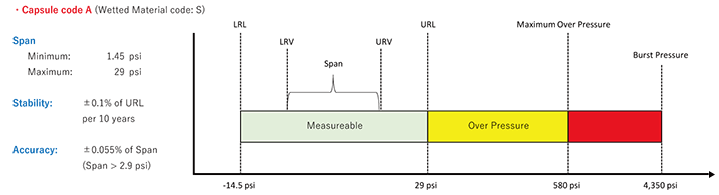
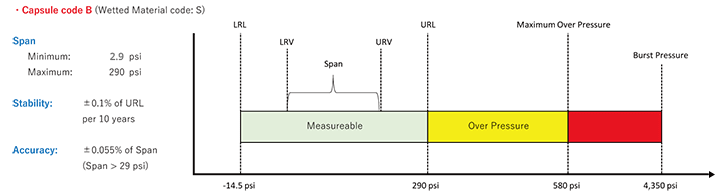
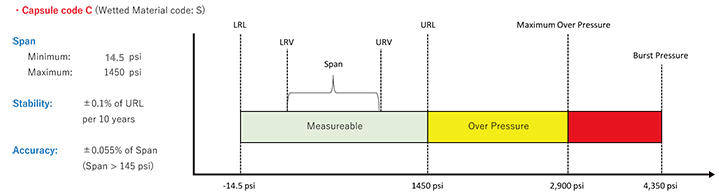
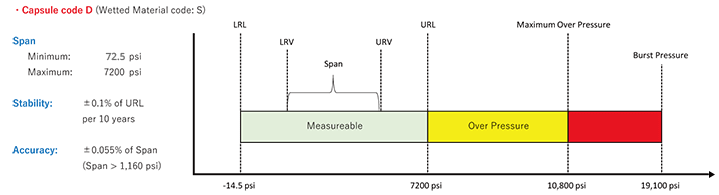
Graphics not to scale


